
Building Power With and For Community
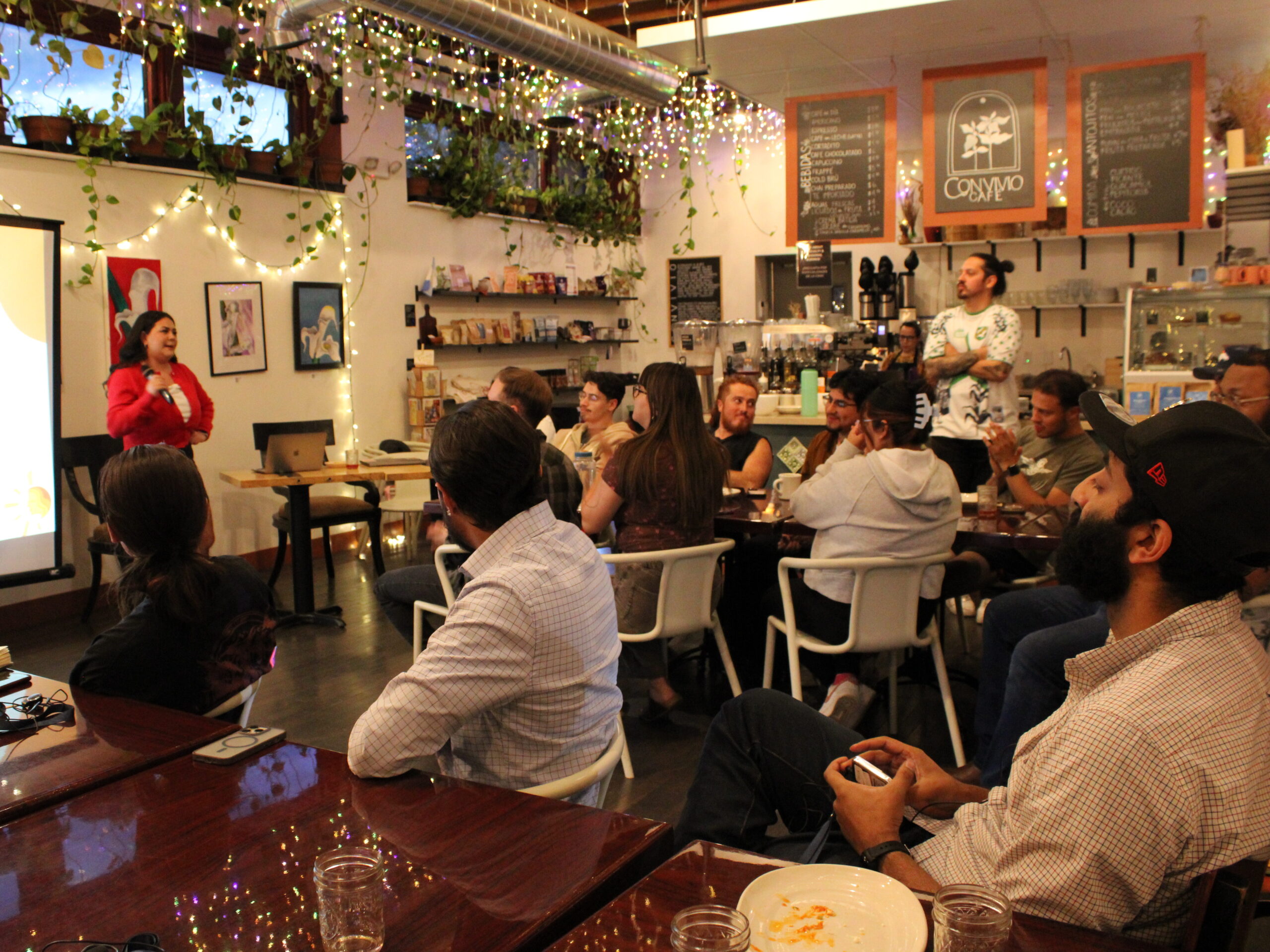
Whether we’re leading voter engagement campaigns, mobilizing communities at Latino Advocacy Day, or organizing educational events, we create spaces where our community is activated. By centering our lived experiences, we inspire civic participation and build the futures we want for our families and communities.
Our decades of organizing and movement-building efforts have contributed to historic wins for reproductive justice. We engage in grassroots organizing through on- and offline outreach, building community power, and relationships.
Join us in building power at information sessions, workshops, policy briefings, town halls, lobby days, state capitol tours, advocacy trainings, panels, fundraising and volunteer appreciation events, charlas comunitarias, festival tabling, door knocking, phone banking, voter registration and education drives, rallies, and marches!
Voter Education
We do this work year-round — not just during election season. By tapping into our community reach and the trusted relationships we’ve built, we share clear voter education, push back on misinformation, and mobilize Latine voters in ways that feel culturally relevant. Latines are one of the fastest-growing voting blocs in the state, and it’s important to flex our power and turnout to vote for our future, our community, and for those who can’t.
COLOR understands that not everyone in our communities are able to vote due to age, documentation status, and other circumstances. Voting is one of the many tools we use, and every individual holds political power whether or not they can vote in the U.S. Click below to get resources and information about elections and voting in Colorado!
Requirements To Vote
- Be 18 years of age or older at the time of the election
- Are a United States citizen
- Have resided in Colorado 22 days immediately before the election you intend to vote in
- Are not currently serving a sentence of confinement or detention for a felony conviction. If you or a loved one are done serving a sentence for a felony in Colorado, even if you are on probation or parole, you can still be eligible to vote! Visit for more information on voting with a record.
- People experiencing homelessness can register to vote, too! Voters may use any address within a specific county that they regularly return to and have the intent to remain. This may include a homeless shelter, a homeless service provider, a park, a campground, a vacant lot, a business address, churches, or any other physical location.
How to Vote in Colorado Elections
- Ballots will be mailed to all eligible voters 22 days before an election.
- Every person in Colorado has the option to vote in person rather than returning their mail ballot. You may vote in person at any Voter Service and Polling Center (VSPC) in your county.
- You can complete your mail ballot and either return it by mail or deposit it at a drop box or Voter Service & Polling Center (VSPC).
If you return your ballot via mail, make sure to affix postage. All ballots must be received by 7 PM on Election Day. Track your ballot.
Election Day Voting
You must update your voter registration or register to vote at least eight (8) days prior to Election Day to receive a ballot in the mail. Check your voter registration at GoVoteColorado.org! If you do not register in time or do not receive a ballot in the mail, visit your nearest VSPC.
You have different ways to cast your vote on Election Day – ballot drop box, or voting in person.
- Voter Service and Polling Centers are one-stop shops where you can register to vote, update your address, vote in person, receive a replacement ballot, and solve many election-related issues. Find locations and hours at GoVoteColorado.gov.
- If you are voting by mail or ballot drop box, be sure to check your ballot instructions to see if you are required to enclose a photocopy of your ID. See a list of acceptable IDs at GoVoteColorado.gov.
- You must bring ID with you to vote in person. See a list of acceptable IDs at GoVoteColorado.gov.
Frequently Asked Questions (FAQs)
Yes! You should update your voter registration each time you move to ensure you receive your ballot at your current address.
You need a Colorado license or ID card OR the last 4 digits of your Social Security Number.
You can update your voter registration or register to vote online eight (8) days prior to any election to receive a ballot in the mail. After, you can visit a Voter Service and Polling Center to register and vote in person or request a ballot.
You can register to vote/ update your voter registration and indicate the address where you’d like your ballot sent. This can be an out-of-state address. Once your ballot arrives, get it in the mail at least eight (8) days prior to any election to ensure it is received by 7 p.m. on Election Day – postmarks don’t count!
If an election judge or anyone else challenges your right to vote at a Voter Service and Polling Center, you still have the right to cast a regular ballot. If you make an oath attesting to your eligibility to vote to an election judge, you must be allowed to cast a regular ballot. If you don’t want to answer the questions about your eligibility, you still have a right to cast a provisional ballot.
If you are challenged or see people being challenged at a VSPC, please call the voter hotline at 1-866 OUR VOTE (1-866-687-8683) or 1-888-VE-Y-VOTA (1-888-839-8682).
Join the Reproductive Justice Movement
At COLOR, we don’t just send emails — we build community. When you sign up, you’re stepping into a space where cultura, action, and collective power come together. Our stories, our struggle, and our future are delivered straight to your inbox. You’ll get updates on policy fights and wins, Latine-led organizing and youth leadership (like our LIPS program!), community events, rallies, and learning spaces, plus real ways you can show up in the streets, at the Capitol, and online.
Because this work is bigger than survival — it’s about joy, justice, and self-determination.