
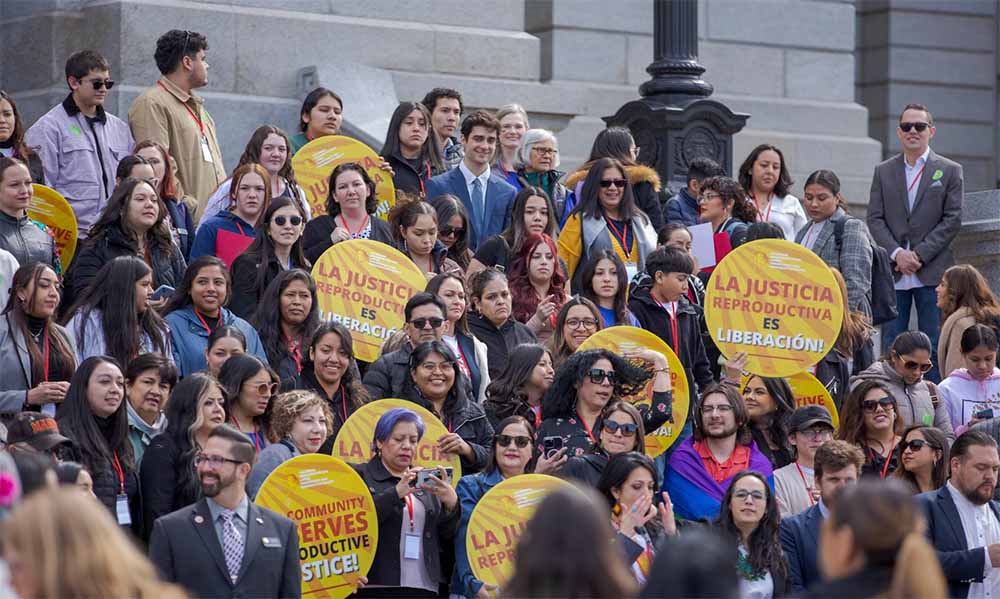
Rooted in Black and Brown Leadership
Trans liberation was not invented in recent years. Black and Brown trans women—Marsha P. Johnson, Sylvia Rivera, Miss Major, and countless others—initiated the modern LGBTQ+ movement. They fought for survival, dignity, and the right to exist. Reproductive justice was articulated by Black women, like Loretta J. Ross, organizing around bodily autonomy, state violence, and survival. Both movements challenge the same systems of biological essentialism, coercion, and bodily regulation.
The reason these movements struggle to be seen as equivocal is the rhetoric surrounding them. Reproductive rights advocates are told “radical trans terrorists” want to erase cisgender women by way of inclusive language. This is wholly untrue.
Trans + Reproductive Justice Are Linked
Reproductive Justice is the human right to maintain personal bodily autonomy, have children, not have children, and parent in safe and healthy environments.
Bodily Autonomy & The Right to Decide
Both trans liberation and reproductive justice center the fundamental right of people to make decisions about their own bodies without coercion, surveillance, or state interference.
Safety and Survival
Both movements respond to real threats to life. Violence, denial of care, and legal erasure unequivocally determine whether people live or die.
Freedom from State Control
Legislation targeting trans people and reproductive rights often moves through the same legislative channels, backed by the same political forces. These fights share an opponent.
Shared Vulnerability & Interdependence
Cohesion is grounded in the recognition that our fates are linked, and not just strategically. What weakens one movement weakens the other.
Dignity, Belonging, and Shared Freedom
Rooted in ubuntu— “I am because we are” —cohesion between trans liberation and reproductive justice is built through three interlocking commitments.
Dignity
The assertion that every person possesses absolute, inherent worth that does not need to be earned, debated, or defended.
Belonging
Trans liberation and reproductive justice protect everyone’s dignity, and our safety depends on each other. It is not enough to simply exist alongside one another; belonging requires practicing mutual care and responsibility, especially under pressure.
Shared Freedom
Recognizing that our lives and struggles are materially and spiritually connected. What affects one community fundamentally alters the other.
Declare Humanness
In this moment, political messaging demands that trans people continually defend or explain their own humanity. We are asked to prove we deserve dignity, safety, and the right to exist. This is a trap.
Cohesion means refusing to accept the opposition’s terms. Our work is not to convince anyone of our humanity—it is to restore and affirm it. We declare: Trans people are human. Trans people are worthy. Trans people belong. Full stop.
Legitimized humanness is not something we earn through explanation or compromise. It is something we practice together, in community, by treating each other—and ourselves—as inherently worthy of dignity, care, and power.
In Community,
Stellan Knowles